 BestSubscribers
Email Marketing Attribution (For Creators, Not Ecommerce)
Email marketing attribution — the process of crediting a sale to a specific email or ad — was designed for ecommerce stores, not newsletter creators. Standard models like last-click, first-click, and multi-touch track short purchase cycles across ads and landing pages. Creator businesses operate on relationship cycles measured in months, where someone reads your emails for weeks before buying a $500 course or $1,000+ coaching package.
After tracking revenue manually for 5 years and ending up with $81,000 in unattributed revenue, I built a different framework called Subscriber Intelligence — it replaces touchpoint tracking with channel-quality tracking. Below: how standard attribution breaks for creators and the 3-part alternative that actually works.
What email marketing attribution means (the standard definition)
Before we get into why it breaks, let's make sure we're on the same page about what "attribution" even means in the marketing world.
Attribution is just the process of figuring out which marketing touchpoint deserves credit for a sale. Someone bought something — which ad, email, or page gets the gold star?
There are three standard models:
- Last-click attribution. The last thing someone clicked before buying gets 100% of the credit. They saw your Facebook ad on Monday, read your email on Wednesday, clicked a Google ad on Friday and bought — Google gets all the credit.
- First-click attribution. The first touchpoint gets 100% credit. In the same example, Facebook gets the gold star because it started the journey.
- Multi-touch attribution. Credit is spread across multiple touchpoints. Facebook gets some credit. The email gets some. Google gets some. Everyone gets a participation trophy based on whatever weighting model you choose.
These models were designed for one specific scenario: a customer interacts with several ads or emails over a few days and makes a one-time purchase. Attribution answers "which touchpoint made them buy?"
Think of it like assigning MVP after a basketball game — you're picking one player (or splitting credit among a few) for a single game. That works when the "game" lasts a week. It falls apart when the game lasts 11 months.
Three reasons standard attribution breaks for newsletter creators
The standard attribution playbook falls apart for creators in three fundamental ways.
The time horizon is wrong
Ecommerce attribution measures days. Maybe a week at most.
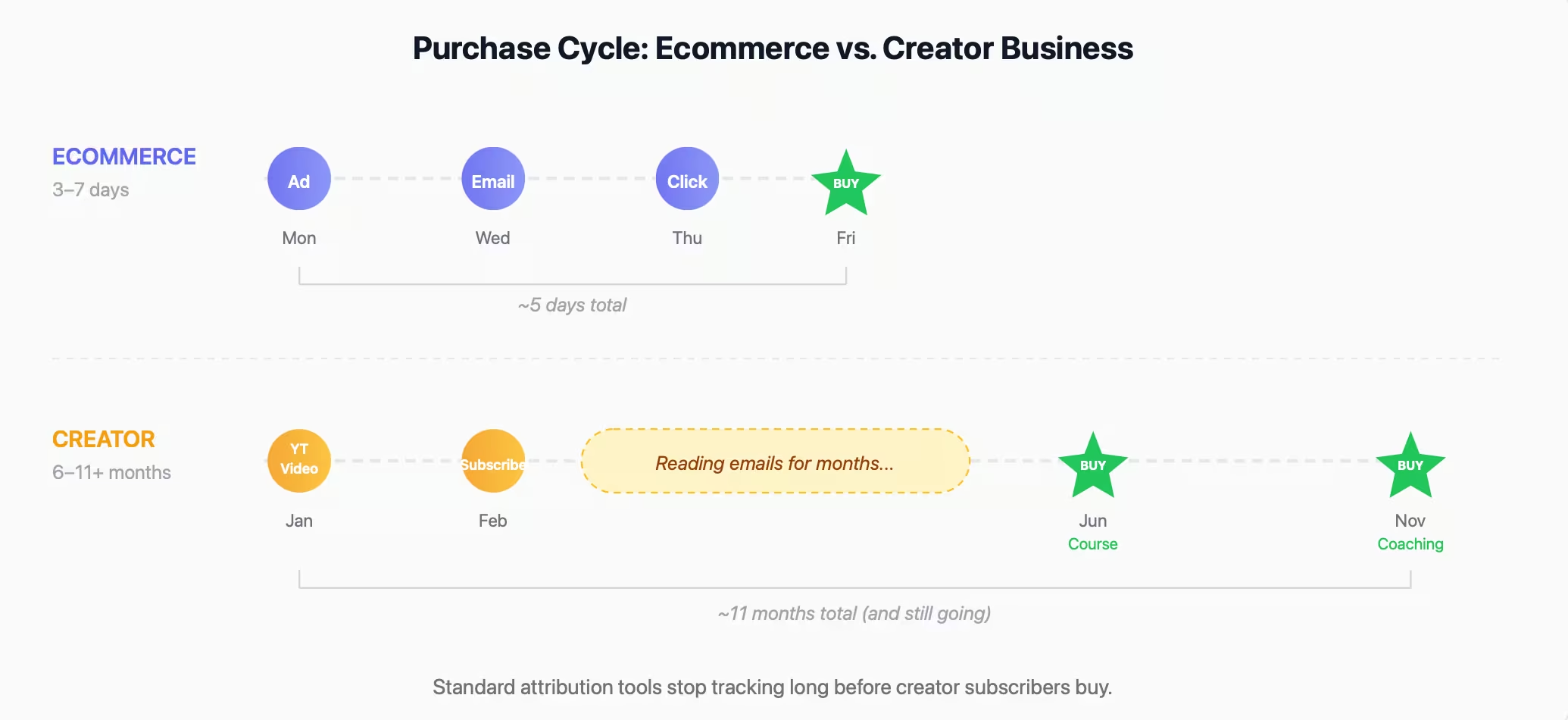
Someone sees an ad on Monday. Clicks an email on Wednesday. Buys on Friday. The whole journey fits inside a single week.
Creator attribution needs to measure months. Sometimes years.
Someone finds your YouTube channel in January. Subscribes to your newsletter in February. Reads your emails for four months. Buys your course in June. Joins your coaching program in November.
That's an 11-month journey from first contact to second purchase.
And that's not unusual. Most creators sell higher-ticket offers — courses for $200–$500, coaching for $1,000+, memberships with ongoing payments. People don't buy those on impulse. They need to trust you first. They need to read your stuff for weeks or months before they feel confident enough to hand over their credit card.
Standard attribution models can't handle this. They were designed for short purchase cycles. By the time your podcast listener buys your course six months later, most attribution tools have long stopped tracking that relationship. The window closed. The data is gone.
The touchpoint model is wrong
In ecommerce, the "touchpoints" are things the business controls and can track — ads, emails, landing pages, retargeting pixels. Everything lives inside platforms with tracking built in.
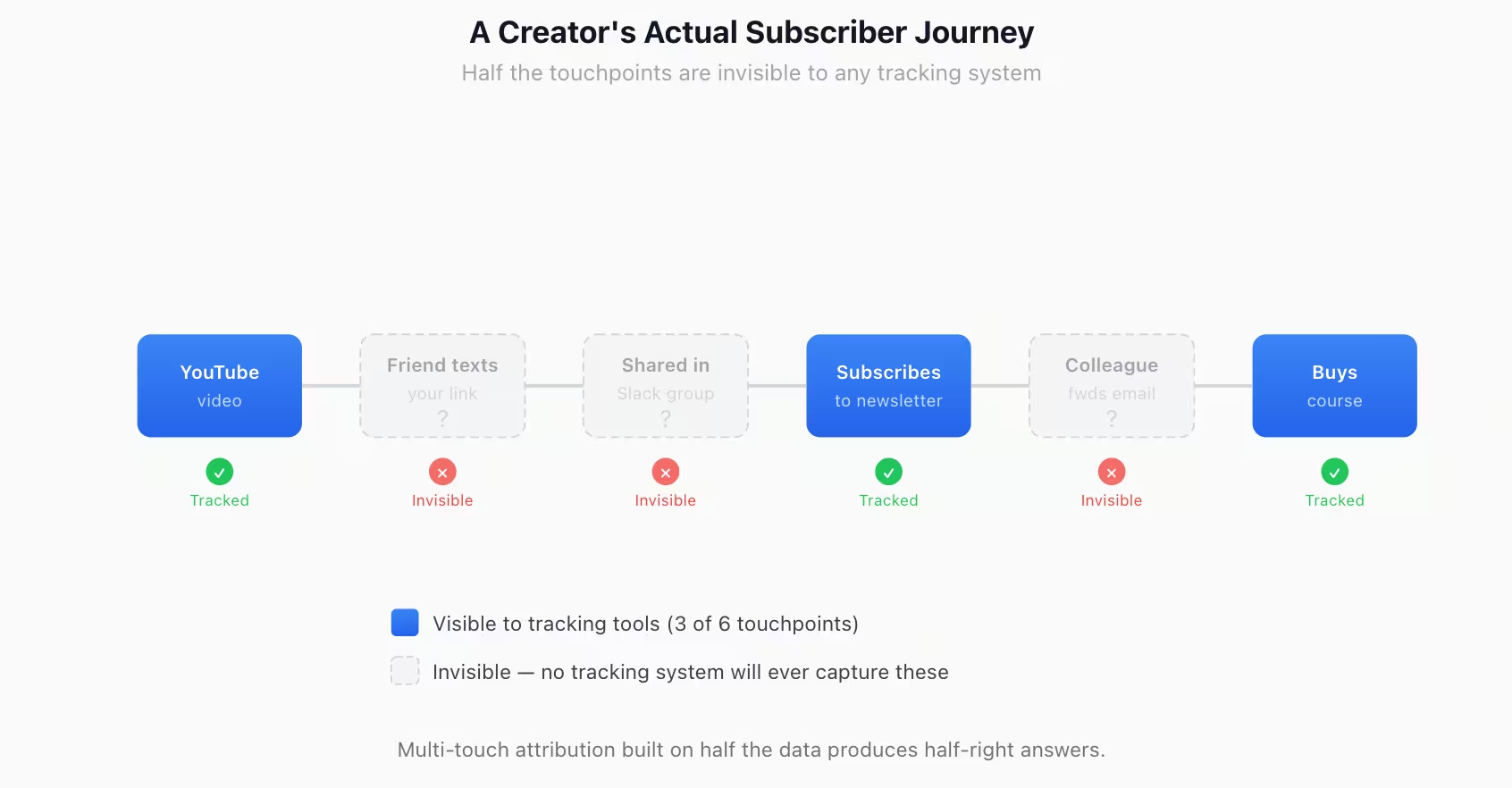
In a creator business, half the touchpoints are invisible.
Think about how people actually discover creators:
- Someone mentions your newsletter in a group chat
- A friend forwards your email to a colleague
- Someone listens to your podcast episode while walking the dog
- A reader shares your article on a Slack channel you'll never see
- Someone screenshots your tweet and texts it to a friend
None of these show up in any tracking system. Ever.
Trying to build a multi-touch attribution model for a creator business is like trying to record every conversation people have about your favorite restaurant. You'll never capture it all. And any model built on half the data produces half-right answers — which are sometimes worse than no answers at all.
The question itself is wrong
This is the big one.
Ecommerce attribution asks: "Which touchpoint gets credit for this sale?"
That's the wrong question for creators.
The right question is: "Which channel brings in subscribers who eventually become buyers?"
See the difference?
Ecommerce attributes individual sales to individual touchpoints. It's trying to figure out which ad or email made someone pull out their credit card at that exact moment.
Creator attribution should attribute subscriber quality to acquisition channels. It's trying to figure out which growth channels — as a category — produce people who go on to buy things over time.
You don't need to know which exact podcast episode convinced someone to buy. You need to know that podcast subscribers, as a group, generate 3x more revenue per person than Twitter subscribers.
That's the shift from touchpoint attribution to source attribution. And it's the foundation of Subscriber Intelligence.
What creator attribution actually looks like (the 3 S's)
Subscriber Intelligence tracks three things:
- Source — where the subscriber originally came from (YouTube, podcast, SEO, Twitter, newsletter swap, etc.)
- Subscriber — who they are (their email, their behavior over time)
- Sale — what they bought and how much they paid
The full framework is in our complete guide to Subscriber Intelligence. But the core idea is simple: you're not tracking clicks. You're tracking channel quality.
Here's what that looks like in practice.
A creator discovers that YouTube subscribers have a lifetime value of $22. Newsletter swap subscribers have a lifetime value of $3. That's a 7x difference — and that single data point changes their entire content strategy.
They don't need to know that "YouTube video #47, published on March 3rd, generated $440 in attributable revenue." That level of granularity sounds impressive but it's mostly noise for a creator business.
They need to know: YouTube brings in people who buy. Twitter doesn't. Podcasts are somewhere in between.
That's channel-level intelligence. And it's both simpler and more useful than touchpoint-level forensics.
How the numbers shift when you track channel quality
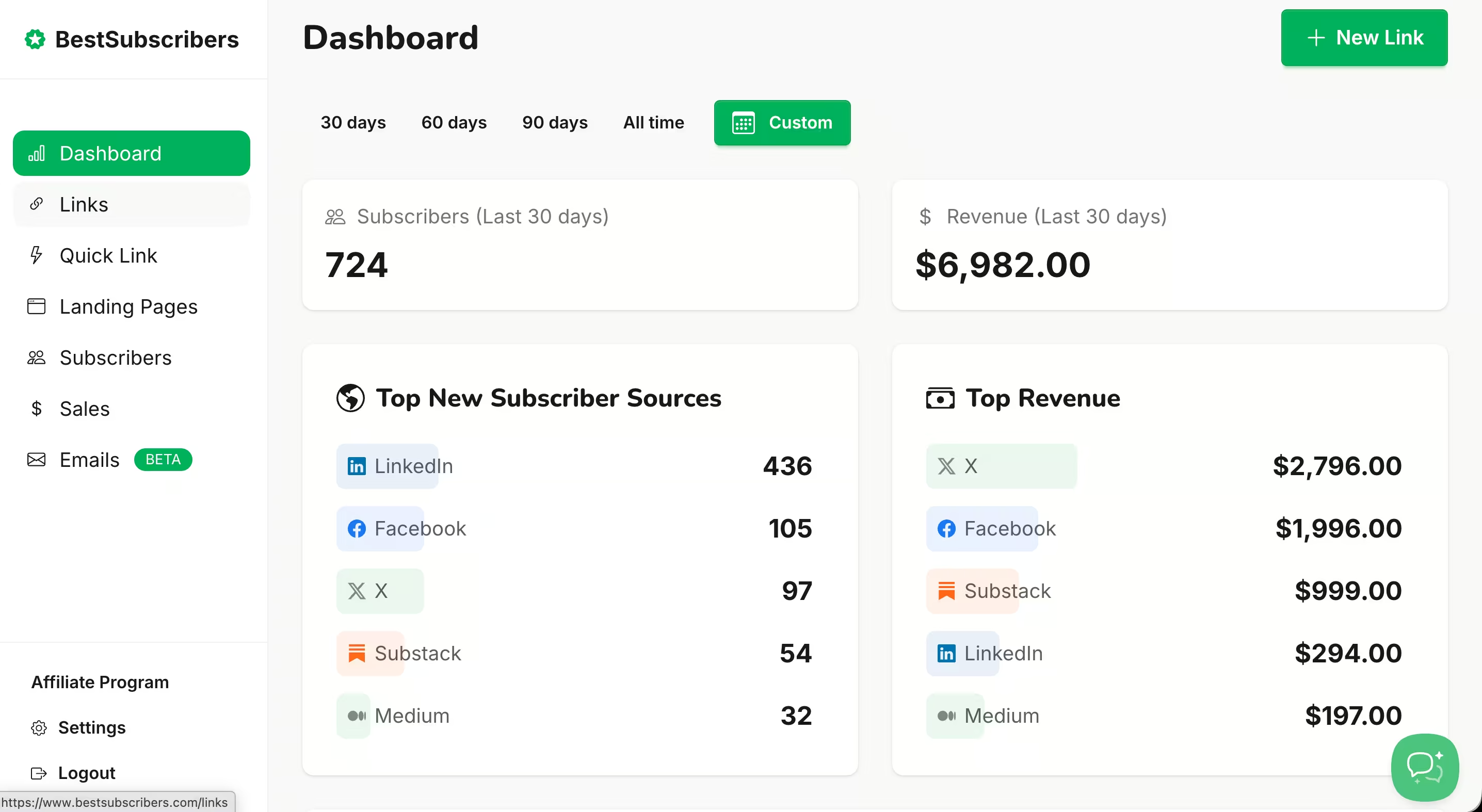
Look at the screenshot above.
| Channel | Subscribers | Revenue | Revenue per Subscriber |
|---|---|---|---|
| X | 97 | ~$3,000 | ~$30.93 |
| 436 | $294 | ~$0.67 |
X drove only 97 subscribers compared to LinkedIn's 436. On the surface, LinkedIn looks like the better channel by a mile.
But look at the revenue column. Those 97 X subscribers spent almost $3,000. The 436 LinkedIn subscribers? Only $294.
That means each X subscriber is worth roughly 46x more than a LinkedIn subscriber. If you were only looking at subscriber counts — which is what most creators do — you'd double down on LinkedIn and ignore X. You'd be optimizing for the wrong channel.
This is exactly the kind of insight you can't get without source-level attribution.
How to set up creator-specific attribution
You don't need to rebuild the entire tracking stack from scratch. The basics are straightforward:
- Tag every acquisition channel with tracking links (UTMs or a tool like datafa.st)
- Capture source data when someone subscribes
- Connect subscriber source to revenue events over time
We cover the full step-by-step setup — including platform-specific instructions for Kit, beehiiv, Substack, and others — in our guide on how to track newsletter revenue by source.
The manual method works at small scale. You can absolutely start with Google Sheets and monthly CSV exports.
But as I explain in that guide, the manual approach has real limitations. Email mismatches between your email platform and payment processor, payment plan complexity, refund corrections, and UTM tracking gaps all compound over time. I ran a manual system for 5 years and ended up with $81,000 in unattributed revenue.
BestSubscribers automates the full Source → Subscriber → Sale chain with one tracking snippet. No spreadsheets. No monthly exports. No stale data.
Why standard attribution tools don't solve this
Maybe you've looked at some of the attribution tools out there. There are plenty. But they were built for a different problem.
| Tool Category | Built For | Why It Breaks for Creators |
|---|---|---|
| Hyros, Triple Whale, Wicked Reports | DTC ecommerce and ad-heavy businesses spending $10K+/month on Facebook ads | Tracks ad clicks to purchases. Doesn't understand newsletter subscriber lifecycles or the 6-month journey from podcast listener to course buyer. |
| Google Analytics 4 | Website session tracking | Tells you 500 people visited from Google this week. Can't tell you which visitors subscribed, and definitely can't connect that to a course purchase four months later. |
| Platform analytics (Kit, beehiiv, Substack) | Single-platform engagement | Each tracks one slice. beehiiv shows subscriber sources. Kit shows email engagement. Substack shows... not much. None connects the full Source → Subscriber → Sale chain. |
BestSubscribers was built specifically for the gap between these tools. It's not an ad tracker. It's not a website analytics tool. It's a newsletter attribution tool purpose-built for creators who sell courses, coaching, digital products, and paid subscriptions through their email list.
Wrapping up
If you've felt like email marketing attribution guides don't speak your language, trust that instinct. They were written for a different business model.
You don't need multi-touch attribution models. You don't need to track 47 touchpoints across 12 platforms. You don't need to hire a data analyst or spend weekends inside Google Analytics.
You need to know which channels bring in subscribers who buy.
That's Subscriber Intelligence. Track the channel, not the click.
For the full framework — including the metrics that matter, the 3 S's in detail, and how to get started — read our complete guide to Subscriber Intelligence.
Or if you're ready to skip the manual work entirely, start your free BestSubscribers trial and see your revenue by source within days.
Email marketing attribution tracks which specific email or ad caused a purchase — usually within a short window of days. Subscriber Intelligence tracks which acquisition channel (YouTube, podcast, SEO, etc.) produces subscribers who go on to buy over their entire lifecycle. One is touchpoint-level forensics, the other is channel-level strategy.
Yes — with Google Sheets, CSV exports from your email platform, and cross-referencing with your payment processor. It works at small scale. But email mismatches, payment plan complexity, and UTM tracking gaps compound over time. I ran a manual system for 5 years and accumulated $81,000 in unattributed revenue.
Even with a single primary channel, attribution helps you validate that it's actually working. Many creators assume their main channel drives revenue — then discover a smaller secondary source produces higher-value subscribers. Without data, you're guessing.
Google Analytics tracks website sessions, not subscriber journeys. It can tell you how many people visited your site from a given source. It can't tell you which of those visitors subscribed to your newsletter, and it can't connect that subscription to a course purchase four months later. Different tool, different problem.

Ready to see which content makes you money?
Stop guessing. Start tracking content to revenue.
Start Free Trial